
Stair Training for Hiking Fitness
Coach Jacq has been training and preparing women for hiking trips and adventures for many years and one of the most common questions she’s asked is:
“What’s the best way to train for hikes when life’s busy and I can’t get out onto proper hiking tracks regularly?”
Her answer? Find some sets of stairs and make them your friends!
Simple, but maybe not so easy.
Here, Jacq shares her go‑to ways to turn everyday staircases into one of your most powerful training tools, and why they’re so effective for hiking fitness.
Why every hiker should “Make stairs their friends!”
By Coach Jacq
Having trained many fabulous women of all ages in Sydney over the years, I’ve seen the same challenge come up time and again: limited time and limited trails.
Why take the stairs?
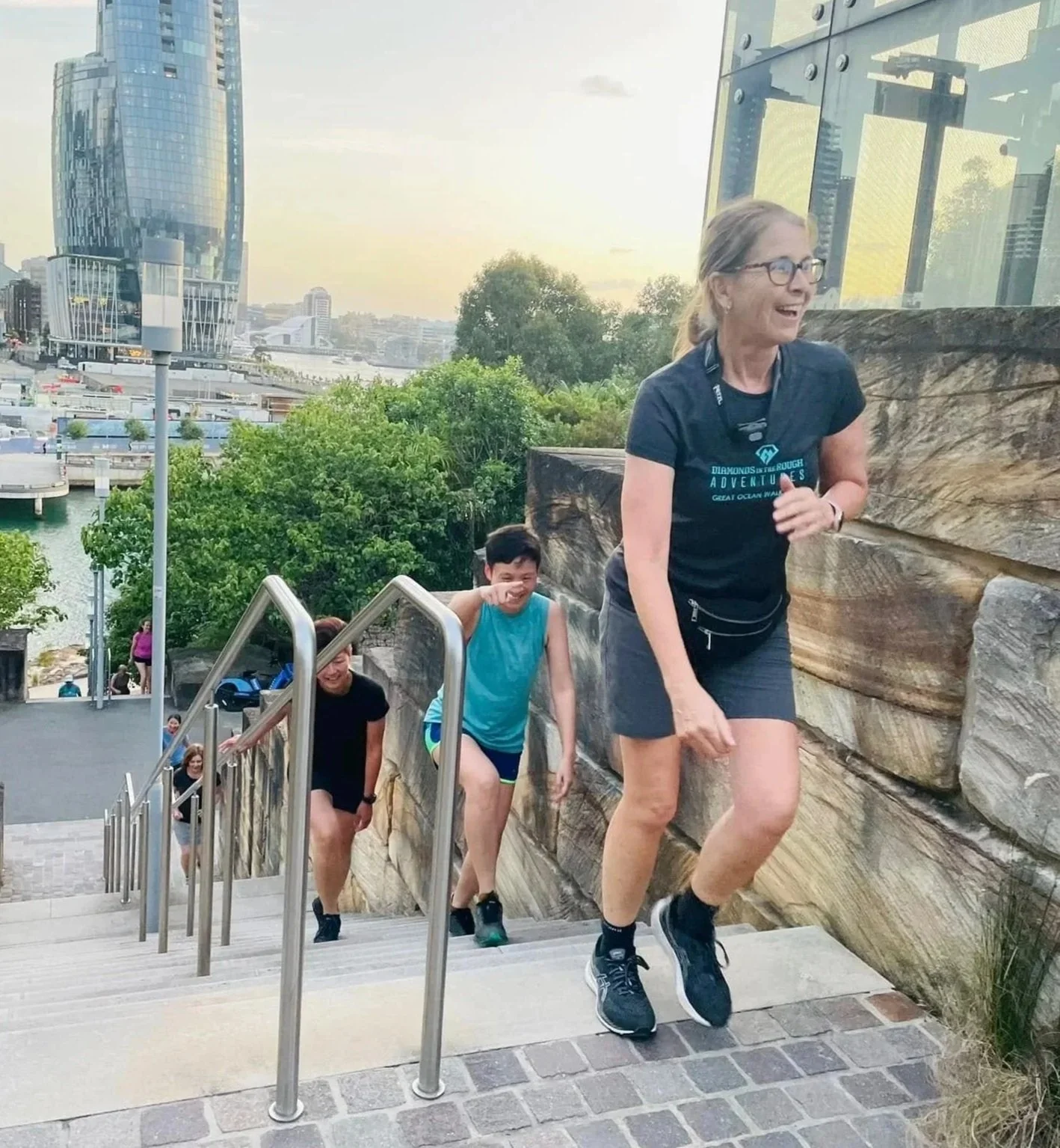
Stair training is not as sexy as going hiking, I know! But it is one of the most effective ways to prepare your body for that big hairy trekking goal you have in minimal time. And, you can find them everywhere: the train station, office, local park etc.
The beauty of stairs is that they closely mimic what we experience on the trail, climbing hills, descending uneven terrain, and maintaining effort over long periods. Add a backpack, good grippy shoes and you’re ready to go.
How do stairs make you a stronger hiker?
1. Build your cardio fitness
Walking uphill elevates your heart rate and challenges your cardiovascular system.
Unlike flat walking, stairs require your body to work harder with every step, helping improve:
- Aerobic fitness and heart health.
- Endurance, less fatigue.
- Recovery between climbs.
- Ability to maintain pace on steep trails
Many of my hiking newbies are surprised how quickly regular stair training improves their ability to tackle hills when they’re no longer stopping every few minutes to catch their breath.
2. Strengthens your ‘hiking muscles’
Stairs target the major muscle groups used during hiking:
- Glutes.
- Quadriceps.
- Hamstrings.
- Calves.
- Core, core, core!
These muscles power you uphill and control your body downhill.
Strong legs, glutes and core don't just make every hiking step easier and they help reduce the risk of injury.
3. Balance and co-ordination
Every step requires weight transfer and stability through one leg, making it an easy way to identify a weaker side and focus on building strength to balance this out, which in turn helps reduce the risk of injury from repetitive movements.
As we age, maintaining balance becomes increasingly important. Urban stair training challenges your co-ordination in a safe and controlled environment, while bush stairs build confidence for tackling uneven tracks.
Stair workouts: with or without your backpack?
Without your pack: Train for speed and agility, building your cardio fitness. Try mixing fast and slow repeats, taking two steps at a time or side stepping up and down. A high intensity workout in minimal time.
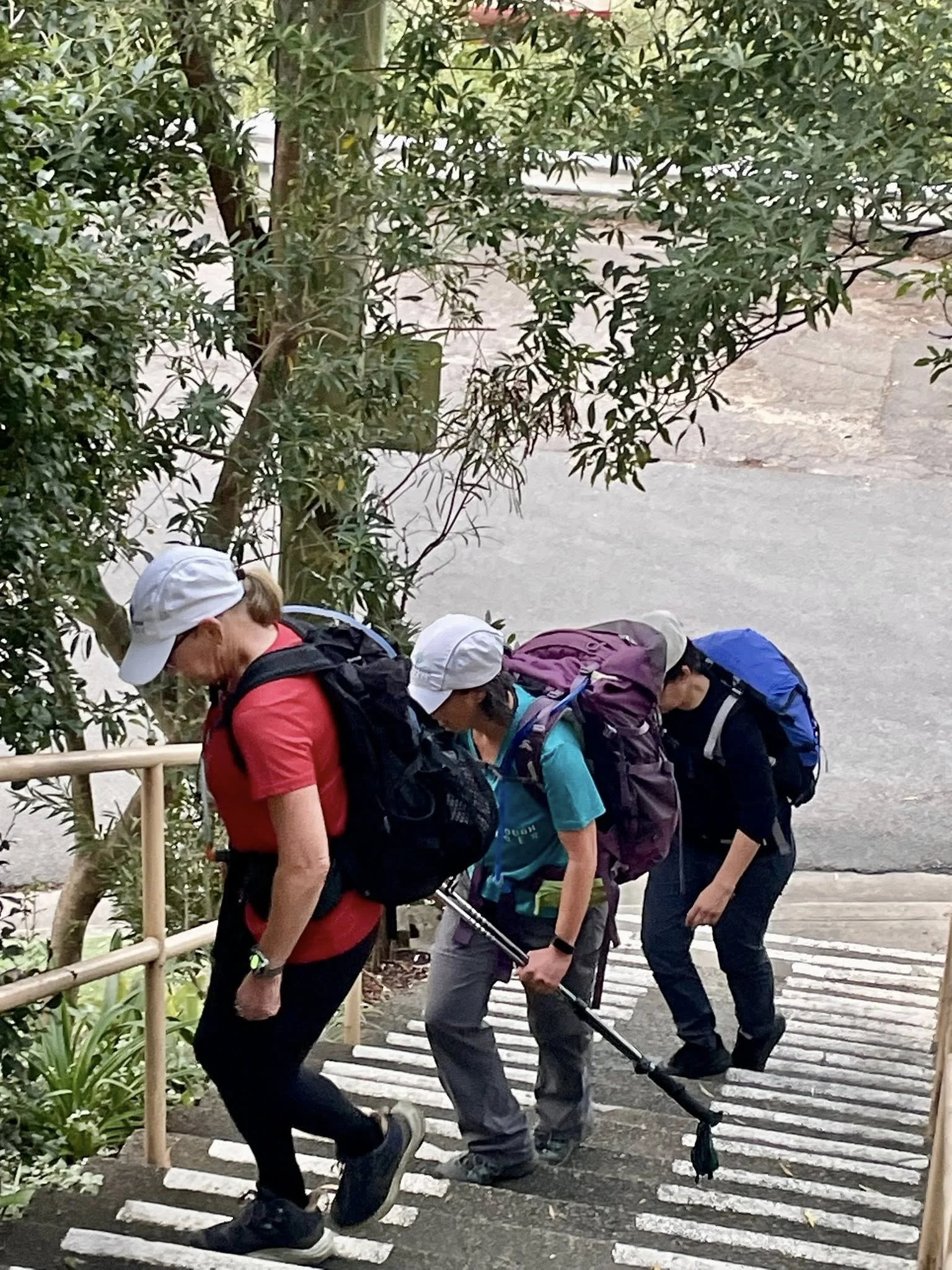
With your pack: Slow things down and focus on form to help your body adapt.
Carrying extra weight, like you will on the trail
Posture changes and managing the change in your centre of gravity
Core engagement to stabilise your body
Strength endurance, to help reduce fatigue on longer treks
If you’re new, start with 5kg and build from there with around 0.5kg every 1-2 weeks.
You will feel fatigued and that’s ok as the body adapts. However, if you experience pain that doesn’t improve in the following days, reduce the weight and/or chat to a medical professional if required.
Urban stairs vs bush trail stairs
Your local set of urban stairs are perfect for:
Easy access, get there even when you’re busy
Consistency in stair height, making pacing simple
Measuring your progress: time yourself on 2-3 sets over six weeks and see your progress
Lower slip or fall risk, although caution and focus are still important
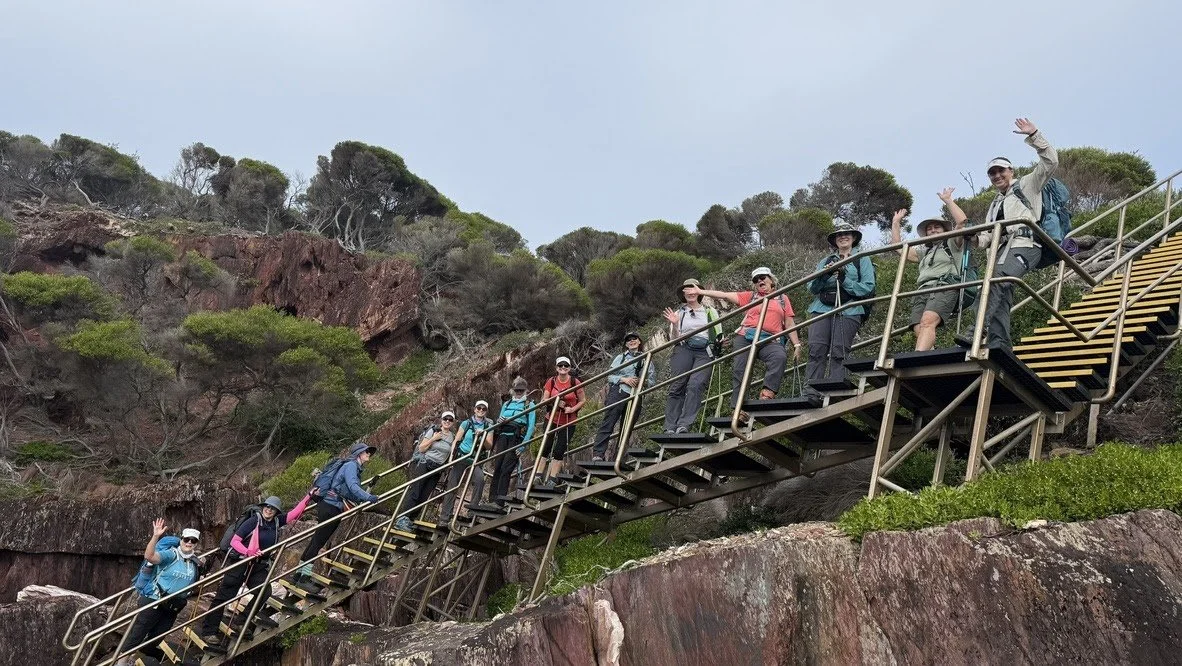
Bush trail stairs can give you that real trail feel:
Uneven surfaces that challenge balance and footwork, often requiring side and lateral steps
Mixed stair heights, providing more variety and overall strength in your workout
Natural terrain that boosts proprioception and confidence in managing the trail
Ready to give it a go?
When you’re comfortable with basic urban stair climbing, give some of my go-to training variations a try:
1. Two Steps at a Time
Glute activation.
Leg strength/stability for tackling those unexpected big steps on the trail.
Power baby!
Have your knee over the foot of your lead leg, and push off the lower foot, bending forward slightly. Engage the glute of the lead leg and drive the heel, maintain good posture as you follow through to bring other foot up to meet it.
2. Sideways Stair Walking
Face sideways while ascending/descending, if safe to do so. This is great for mimicking uneven trail requirements.
Strengthens hips and glute medius.
Improves lateral stability.
Helps protect knees.
Complete one set leading with the right leg, then repeat with the left. Each foot joins the other on the same step. Start with one step a time. Increase to every second step once you feel confident.
A further progression is to cross the lower foot over in front of the other and place it on the step above it, adding extra challenge for strength and stability.
3. Slow Controlled Descents
Many hikers struggle more going down than up….hello ITB and/or patella pain!
Lower your foot slowly and gently step down engaging your glutes on the opposite leg for balance.
Glute strength which supports reducing ITB fatigue/strain.
Quadricep strength.
Results? Better knee control, reduced ITB fatigue and improved recovery after long hikes.
Quality rules here. Try not to drop onto the step; think gently and quietly. Practice on shallow stairs and build up to deeper stairs.
4. Backpack Interval training
Wear your hiking pack and alternate between:
Two minutes steady climbing with controlled breathing, which allows you to still hold a conversation at the top.
One minute faster climbing where you are huffin’ and puffin’, and there’s no option for a chat!
5. Single-step endurance climbs with backpack
Maintain a comfortable pace for 10–20 minutes continuously
This develops the endurance needed for long mountain ascents. Build pack weight as you improve.
5. Jumping up and down urban stairs (without pack)
This helps build explosive power, and helps increase your bone density via controlled joint impact.
Jump up a regular size step with both feet. Squat down slightly and swing your arms and engage core to build momentum and power to jump up onto the step. Repeat for 5-10 stairs, and increase as your strength builds.
If safe to do so (and ideally with a handrail you can grab if required) try stepping (single leg) down two regular steps at a time. Soft knee bend on landing and engage your glutes to help control your landing.
Try jumping down single stairs two feet at a time…like a squat jump…just down. Control the landing with a soft knee bend and engage glutes and core.
Remember: Before starting any new training routine, especially if you’re returning from injury or managing a health condition, it’s a good idea to check in with your GP or a qualified health professional. And as always, listen to your body and progress at your own pace.
Take your next step today
Many women think they need to spend hours on bush tracks every weekend to become hiking legends.
The reality is that consistent stair training can dramatically improve your hiking fitness, strength, confidence, and endurance, often in less time than a long traditional hike.
For Diamonds, stair sessions have become one of the most valuable training tools we use. They help us build the strength to climb mountains and traverse deserts, carry our packs comfortably, and enjoy each adventure with less fatigue and more confidence.
So next time you walk past a set of stairs, don't avoid them. Stop, say “Hello”…and make them your friends!
Every staircase is an investment in your next Diamond adventure. 🥾⛰️✨