
Cold Mornings, Warm Days: How to Pack for Variable Weather
Autumn and winter hiking is hard to beat. Cooler air, clear skies, fewer crowds and trails that feel calm and expansive again.
But if you’ve ever started a hike, rugging up in the car park, only to be stripping layers an hour later, you already know the challenge: cold mornings, warm days, and constantly changing conditions.
At Trek Training, a lot of our hikes start early and move through a mix of climbs, coastal exposure, bushland and shade. Packing well isn’t about really about carrying more, it’s about being prepared and adaptable.
Why Layering Matters Here
It’s common to experience:
Cold starts in valleys and bushlandwine
Rapid warming once you’re moving uphill
Cool coastal winds on exposed headlands
Shaded tracks that stay chilly all day
A hike can begin near single digits and finish in sunshine. A coastal walk might feel warm until a southerly hits. Packing with flexibility is essential.
Think Movement, Not the Car Park
The number one mistake we see? Dressing for how it feels standing still.
When you’re walking uphill- especially on training hikes-your body heats up quickly. If you start too warm, you’ll sweat early, and that sweat can lead to getting cold later when you stop.
At Trek Training we encourage hikers to:
Start slightly cool
Warm up through movement
Adjust layers as conditions (and terrain) change
If you’re comfortable five minutes in, you’re probably overdressed.
The Trek Training Layering System
1. Base Layer: Your Most Important Choice
Your base layer manages moisture. Staying dry = staying warm.
What works best on hikes:
Lightweight merino or technical fabric
Breathable and quickdrying
Comfortable under a pack
We avoid cotton completely. Once it’s wet, it stays wet—and that’s when the chill sets in.
2. Mid Layer: Warmth You Can Remove Easily
This is your flexible warmth layer, used at the start, in wind, or during breaks.
Good options include:
Light fleece
Thin insulated jacket
Longsleeve thermal top
On most Trek Training hikes, this layer comes on and off multiple times—and that’s a good
thing.
3. Outer Layer: Wind and Weather Protection
Your outer layer doesn’t need to be bulky or heavy.
We look for:
Lightweight windbreaker or rain shell
Easy to pack and quick to grab
Enough protection for coastal wind or brief showers
A shell can make a huge difference on exposed tracks, especially near the coast or on
ridgelines.
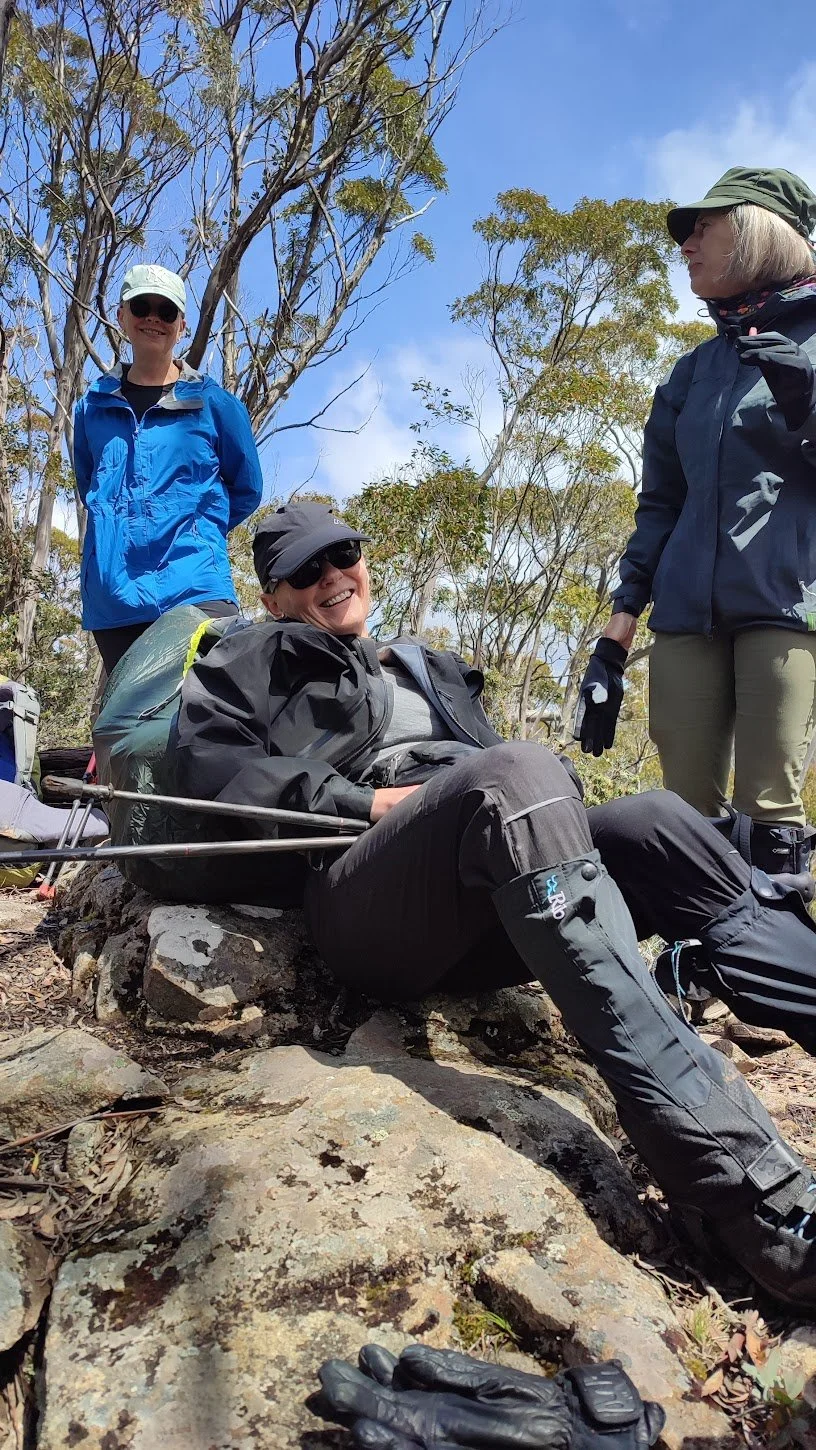
Small Items That Make a Big Difference
Beanie or Light Hat
Perfect for cold starts and easy to stash once you warm up.
Sunglasses and Sunscreen
UV is still strong even on cool days- especially on coastal and open tracks.
Lightweight Gloves (Optional)
Great for early mornings or higher elevations (Blue Mountains and escarpment walks
especially).
Plan for Stops, Not Just Walking
You’ll generate heat while moving. You’ll lose it quickly when you stop.
That’s why we always recommend:
One warm layer reserved specifically for breaks
A dry top if you tend to sweat
Spare socks on longer hikes
Group hikes often involve longer pauses—for water, snacks, regrouping—so warmth during stops matters.
Eat and Drink (Even When You’re Not Thirsty)
Cool weather tricks people into underfueling.
We remind our hikers to:
Drink regularly (you still sweat)
Eat small, frequent snacks
Consider something warm on longer walks
Fuel supports energy, warmth, and endurance—especially on training hikes.
What We Aim For at Trek Training
We don’t aim for hikers to be perfectly warm all the time. We aim for them to be:
Comfortable
Dry
Able to adapt as the day changes
When you pack with intention, variable conditions stop being stressful—and become part of what makes hiking enjoyable.
Final Thoughts
Cold mornings and warm days are normal for hiking and with the right approach, they are a gift, not a problem.
Pack flexible layers. Expect to adjust. Trust that movement creates warmth.
That’s how we hike and train comfortably all season long.
Clear mornings. Strong walks. Confident hiking.